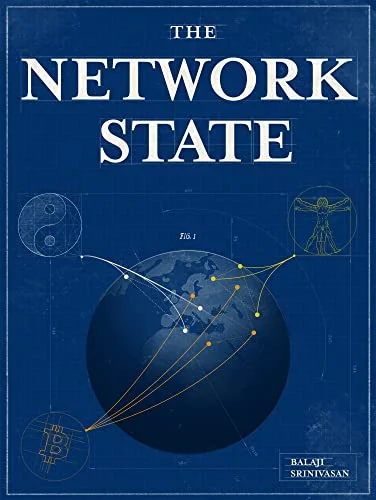
Network State
concept · 2022
A network state is a community that begins online — bound by a shared purpose, moral code, or set of practices — and gradually crystallises into physical territory and recognised sovereignty. The term was formalised by Balaji Srinivasan in The Network State (2022), inverting the historical sequence: ideology and community first, infrastructure and territory second.
Srinivasan defines a network state as "a highly aligned online community with a capacity for collective action that crowdfunds territory around the world and eventually gains diplomatic recognition from pre-existing states." The concept is a direct response to the perceived ossification of legacy nation-states and the increasing ease of forming high-trust communities online. It draws on the cypherpunk tradition of building parallel infrastructure — cryptocurrency for treasuries, encryption for internal communication, self-sovereign-identity for membership — while extending the logic into governance, real estate, and eventual statecraft.
Network states are opt-in and non-territorial in their early phases, making them a form of exit rather than reform — a way for groups with strong shared values to coordinate without first capturing an existing political apparatus. Critics argue they risk reproducing the exclusions they aim to escape, and that diplomatic recognition is a much harder problem than the framing admits. Defenders counter that the model is partly descriptive: the Amish, the Orthodox Jewish diaspora, and various digital-nomad enclaves already exhibit many network-state characteristics. Either way, the concept now sits alongside seasteading and parallel-polis thinking.