Surveillance Capitalism
concept · 2019
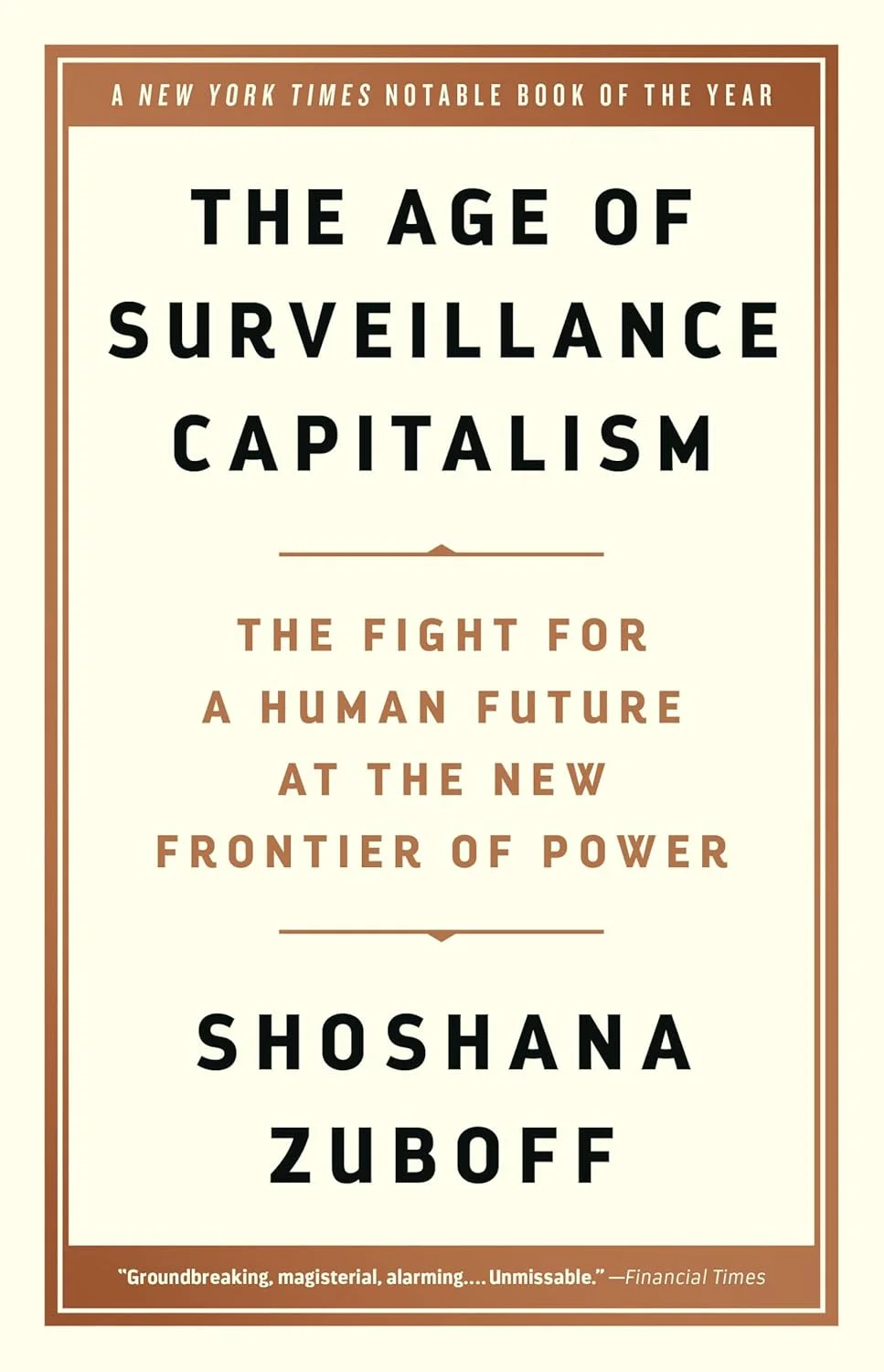
Surveillance capitalism is the term coined by Harvard professor Shoshana Zuboff for an economic order that claims human experience as free raw material for commercial practices of extraction, prediction, and sale. The system is driven primarily by large platform companies that collect and commodify behavioural data on a scale, and with a granularity, that has no historical precedent.
The core mechanism operates through what Zuboff calls the "behavioural surplus" — the excess data collected beyond what is needed to improve a product, then used to build models that predict and influence future behaviour. The harvest runs not only through obvious channels like social-media posts and search histories but through IoT devices, smartphones, location pings, and ambient sensors. The processed predictions are sold to advertisers and other buyers seeking to modify behaviour at scale. Machine-learning systems are the substrate; the modification of behaviour is the product.
The implications run far beyond privacy. By creating powerful systems of behavioural prediction and steering, surveillance capitalism threatens individual autonomy and democratic decision-making at a structural level. The concern overlaps tightly with the cypherpunk argument that centralised data collection is itself the problem, not merely its abuses. The response in the parallel-society tradition is to remove the conditions surveillance capitalism requires: encryption against interception, decentralised alternatives to the platforms that aggregate the data, and tools that minimise the data produced in the first place.
Books