Technological Singularity
concept
The technological singularity is a hypothetical future point at which artificial intelligence surpasses human intelligence and begins recursively improving itself — designing smarter systems, which design smarter systems still — at a pace that rapidly becomes incomprehensible to unaugmented humans. The analogy is to a gravitational singularity: a point beyond which the normal rules break down and prediction becomes impossible. The claim is not merely that AI will become powerful, but that the rate of change itself accelerates beyond any human capacity to anticipate or steer.
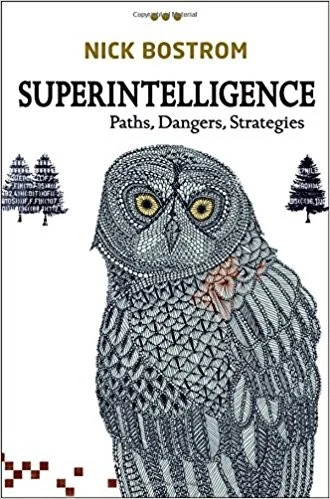
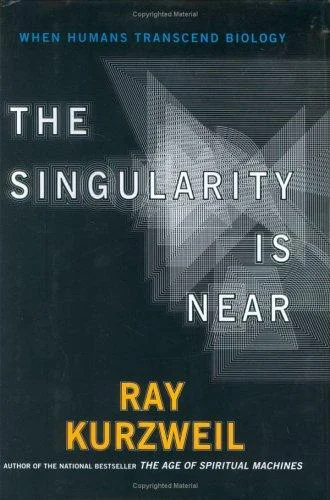
The term was popularised by Vernor Vinge and Ray Kurzweil, and sits at the intersection of machine learning scaling, recursive self-improvement, whole-brain emulation, and human augmentation. Kurzweil's version is optimistic — a gradual merger of human and machine intelligence through neural interfaces. The contrary tradition, associated with Eliezer Yudkowsky and Nick Bostrom, argues that the default outcome of recursive self-improvement is misaligned superintelligence pursuing goals incompatible with human survival: the alignment problem.
For the parallel society, the singularity raises stakes that dwarf most other concerns. A superintelligent system controlled by a state or corporation would represent the ultimate concentration of power — one that could render existing mechanisms of resistance, exit, and decentralization obsolete overnight. The question of who builds advanced AI, under what governance, and with what values embedded is therefore political before it is technical. Open AI development, decentralised training, and democratic oversight are not preferences but attempts to prevent the singularity, if it comes, from becoming the last and permanent panopticon.
Books